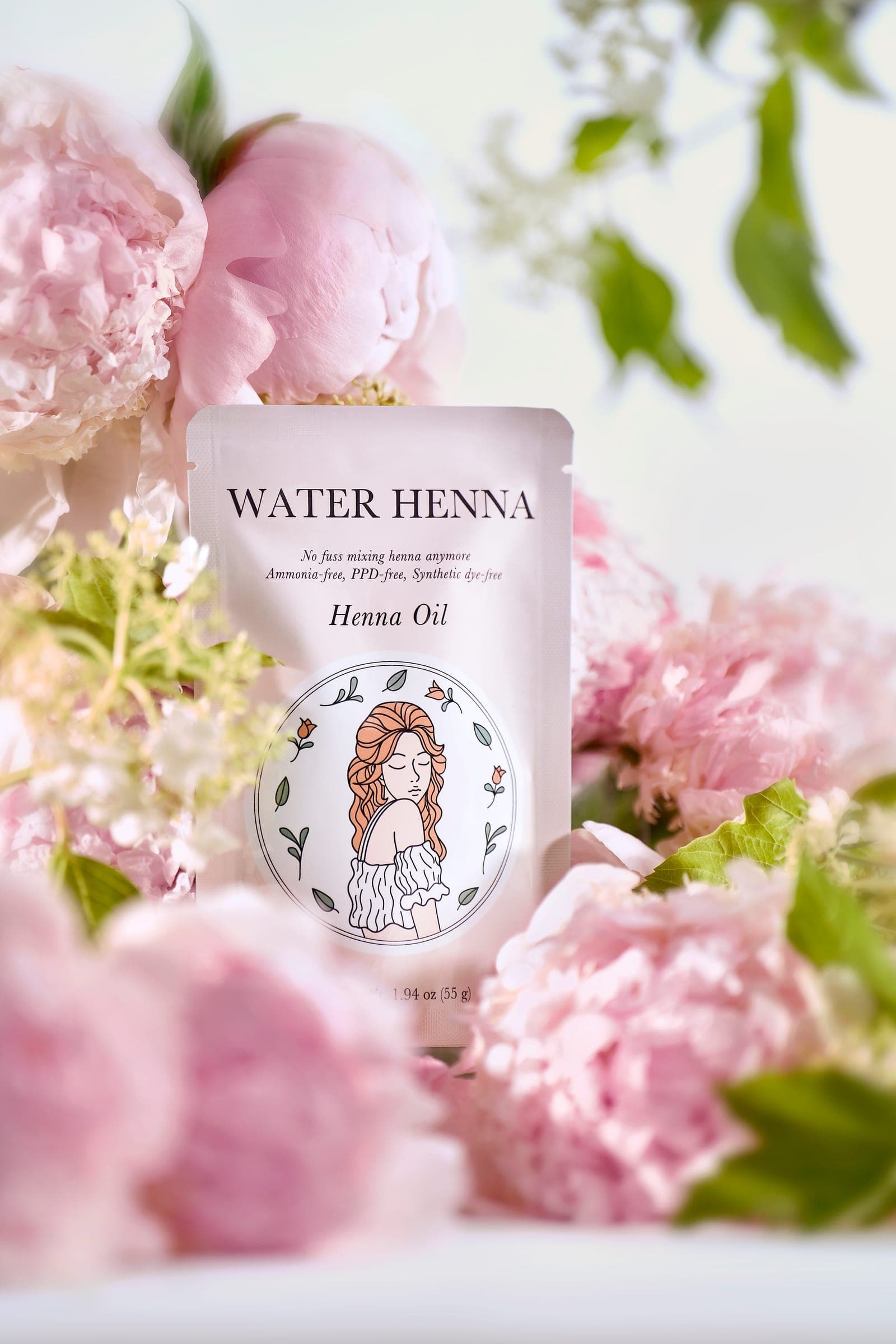
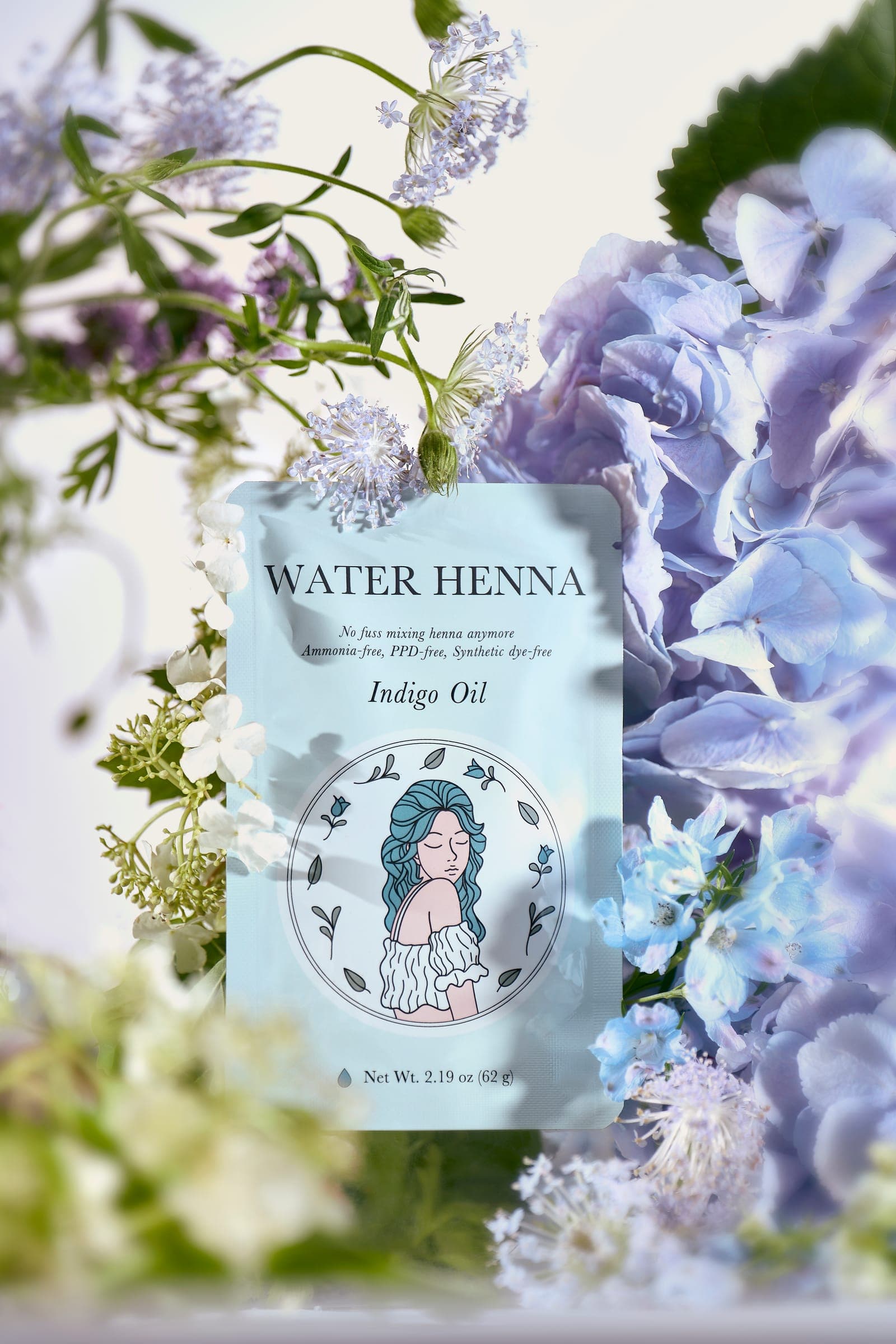
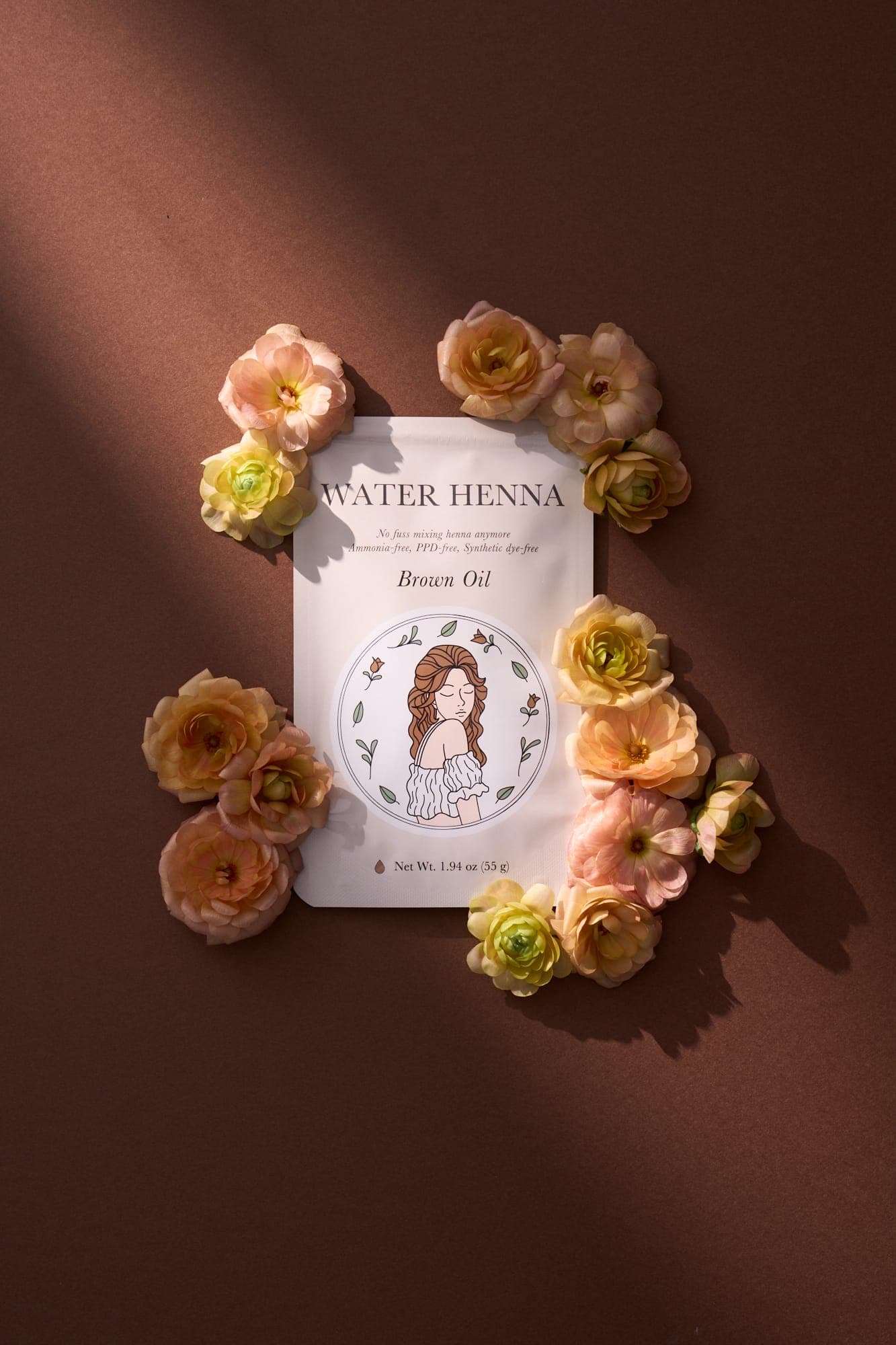
The Easiest Water Henna Guide You'll Ever Read
The easiest guide for first-time Water Henna users. Prep, mix, apply, wrap, wait, rinse — how natural plant pigment settles onto gray hair, and why the color right after rinsing isn't the final color.

People who see Water Henna for the first time tend to ask almost the same things. How exactly do you use this? Does the color really come out well? If 100% natural henna dyeing is new to you, it's only natural to feel a little unsure — because it works a bit differently from chemical dye, where you just pick a shade off a color chart.
Water Henna isn't a dye that lifts dark hair lighter. It lays natural plant pigments — lawsone and indican — over gray hair to cover it naturally. So when choosing a color, it helps to think less about "what color should I turn my whole head?" and more about "what feeling do I want my gray hair covered in?"
Today I want to lay out the most basic way to use Water Henna, simply enough for first-timers.
Using Water Henna Isn't Complicated
It really isn't hard. In short: prep, mix, apply, wrap, wait, then rinse. When people hear "natural henna," many picture kneading powder into water, letting it cure for a long time, adjusting the consistency. That method suits some people just fine, but for those starting natural dye for the first time, it can feel like a hassle.
Water Henna makes that process easier. There's no adding water to adjust consistency, no long curing wait. Put the Water Henna oil and essence into a bowl and mix well, and you get a paste that's easy to apply. At first the oil and essence may look like they're separating, but after about a minute of thorough mixing it turns into a smooth, elastic texture.
① Apply Thickly Over Gray Hair
When applying, it's important to lay the paste on thickly where the gray shows. Natural plant pigment develops in proportion to how much touches the hair, so spreading it too thin can leave the color a little underwhelming.
Areas where gray stands out — the front hairline, the part, the crown, beside the ears, the sideburns — deserve extra care. Rather than lightly covering the gray, think of fully wrapping each strand in paste. Getting just this part right can make a noticeable difference in how the color develops.
② Wrap Snugly With Plastic Film
Once you've applied it, wrap your hair in plastic film. The wrap isn't only there to keep the paste from dripping. It keeps the paste from drying out and helps it cling closer to the hair.
With natural henna, the time the paste stays moist and in contact matters. Wrapping helps the color develop more steadily. It may feel like a nuisance, but try not to skip it — think of it as helping the natural pigment stay in close contact with your gray hair.
③ The Warmer It Is, the Better It Takes
While you wait, stay somewhere warm if you can. A warm room beats a cold one, and on chilly winter days you can add a towel or hair cap over the wrap. Natural henna tends to develop color more comfortably when there's a little warmth.
And after spending some time warm, letting it rest briefly — not too hot — gives the natural pigments time to settle firmly into the hair, which helps the color last. It sounds like a small thing, but in natural dyeing these steps matter more than you'd expect.
The Color Right After Rinsing Isn't the Whole Story
After 30 minutes, rinse thoroughly with lukewarm water. As you rinse, wash slowly so no paste is left between your scalp and hair. Rather than scrubbing in a hurry, gently loosen it out with lukewarm water.
Here's something I really hope you'll remember: with natural pigment, the color right after rinsing isn't the whole story. At first it may look a bit faint or not fully developed, but it often settles into something calmer as time passes.
So instead of judging the color — or feeling disappointed — right after dyeing, it's better to check again a day later in natural light. Water Henna is less about instantly covering and more about plant pigment slowly settling onto gray hair.
Once you understand that difference, it feels much easier. Rather than trying to be perfect from the very first time, use it with the mindset of slowly watching how the color develops on your own hair. Natural dyeing asks for a little patience, but in return there's a process of settling in naturally.
Read next
- How to Use Water Henna — A First-Timer's Simple GuideHow To · 4 min read
- Henna Hair Dye: What Changes When You Switch from Powder to Liquid?How To · 6 min read
- Tired of Long Henna Dyeing Time? A Henna Dye That Finishes in 30 MinutesHow To · 3 min read
- "It Didn't Take": What 817 Customer Reviews Say About Henna That Won't DevelopHow To · 6 min read