Why Does Gray Hair Surge in Menopause? Hair Changes Explained
As estrogen drops around menopause, gray hair surges and strands thin. Here is why, and how gentle natural henna is the safer way to color a sensitive scalp.

Last year a customer wrote to us.
"I turned 50 and the gray just exploded. A month ago it wasn't like this. My hair feels thinner and I think I'm losing it. It's really upsetting."
That message stayed with me for a long time. My own mother said almost exactly the same thing at the same age.
Why Hair Changes During Menopause
Around menopause, estrogen falls sharply. Estrogen does more for hair than most people realize — it helps hold each strand in its growth phase. When it drops, three things happen at once.
First, gray hair surges. The melanocytes that give hair its color slow down as estrogen falls, so gray and white strands multiply quickly. If you had a handful of grays through your forties and then hit fifty and felt it happen "overnight," this is why. It wasn't overnight. It was a threshold.
Second, hair thins and sheds. The growth phase shortens, and fewer strands emerge from each follicle. Hair that used to feel full slowly loses its volume.
Third, it gets dry. Less estrogen means less sebum from the scalp. Hair turns brittle, ends split, and the shine goes.
All three arrive together, which is exactly why it feels so overwhelming. We hear the same story constantly from readers of our guide to henna after 50.
Why Chemical Dye Is Riskier Now Than It Was at 35
Your scalp is changing too. A scalp producing less sebum has a weaker barrier against irritants, and immune response shifts with age as well.
Now put PPD or toluene-2,5-diamine on that scalp every three weeks. The dye that never bothered you at 35 suddenly itches, stings, and leaves the scalp sore. "I never had a reaction until I turned 50" is one of the most common things customers tell us — and it is not a coincidence.
Menopause makes the whole body more reactive. The scalp is not an exception. This is precisely the moment to move to something that does not irritate.
Why Henna Suits Menopausal Hair
Henna is not just the safer option here; it happens to address the specific problems menopause creates.
First, it thickens the strand. Lawsone, the pigment in henna, binds to the keratin in your hair and forms a coating along the shaft. As we covered in henna versus hair supplements, research from Konkuk University measured strands more than 57% thicker after henna coloring — for hair that has been getting finer every year, no small thing.
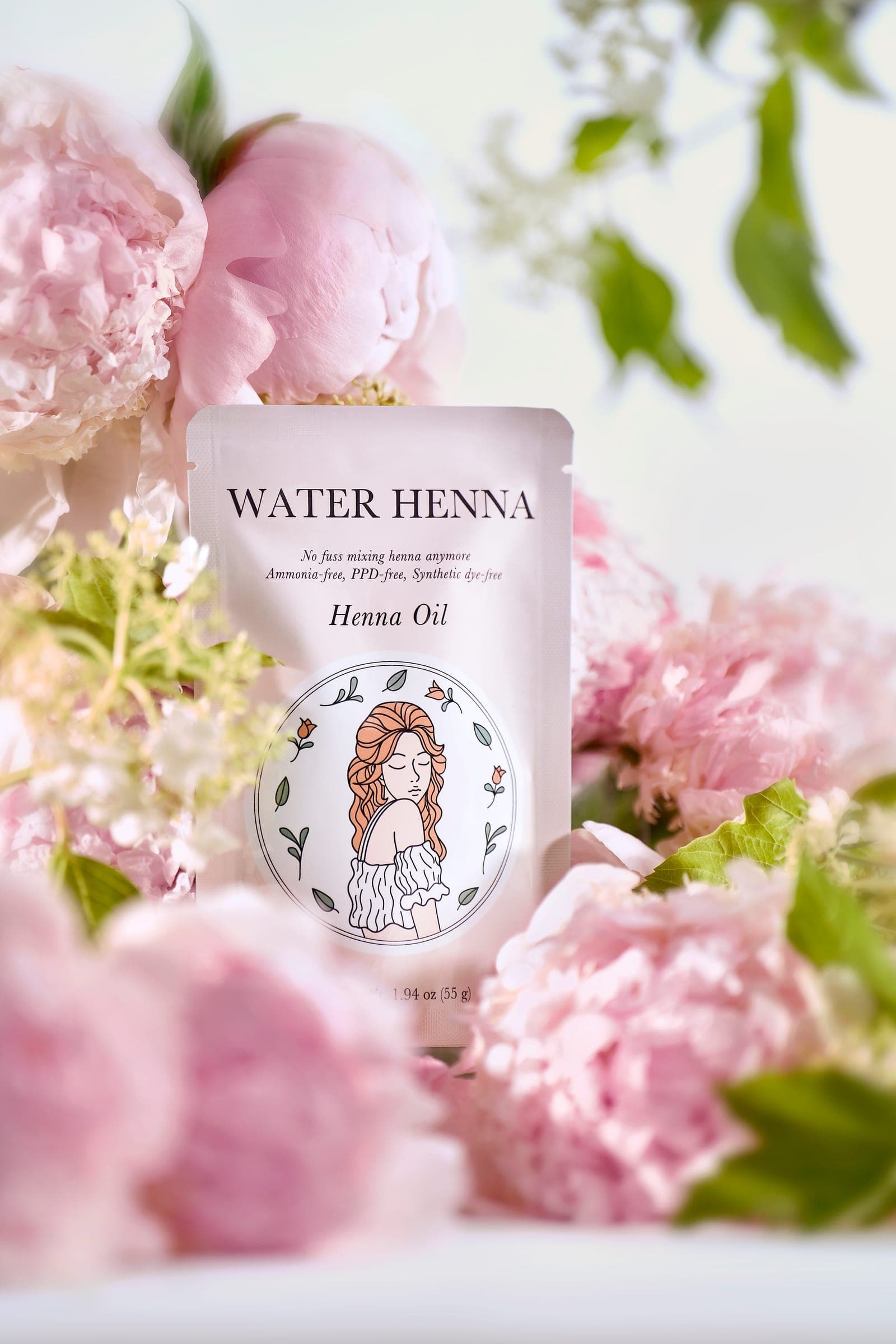
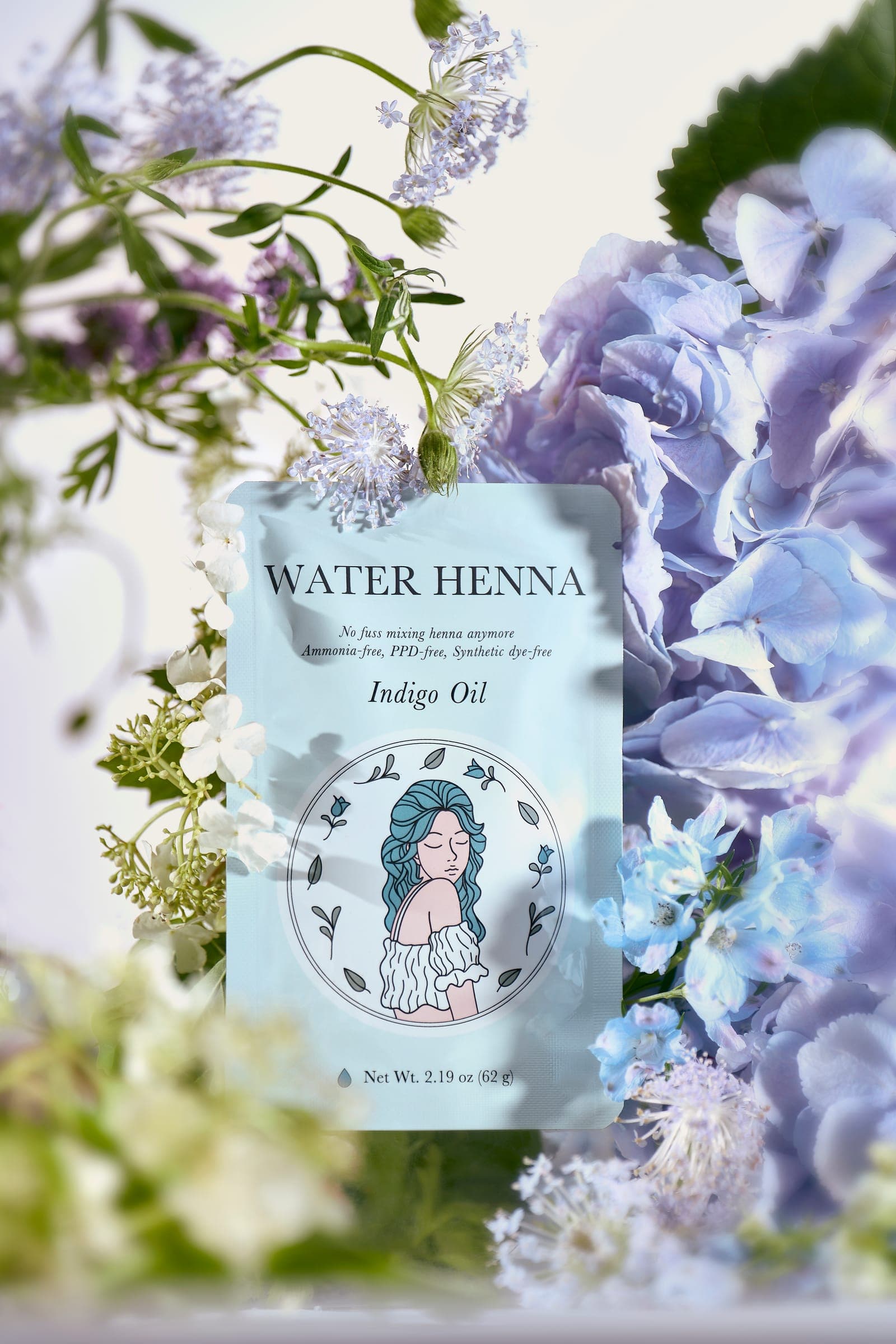
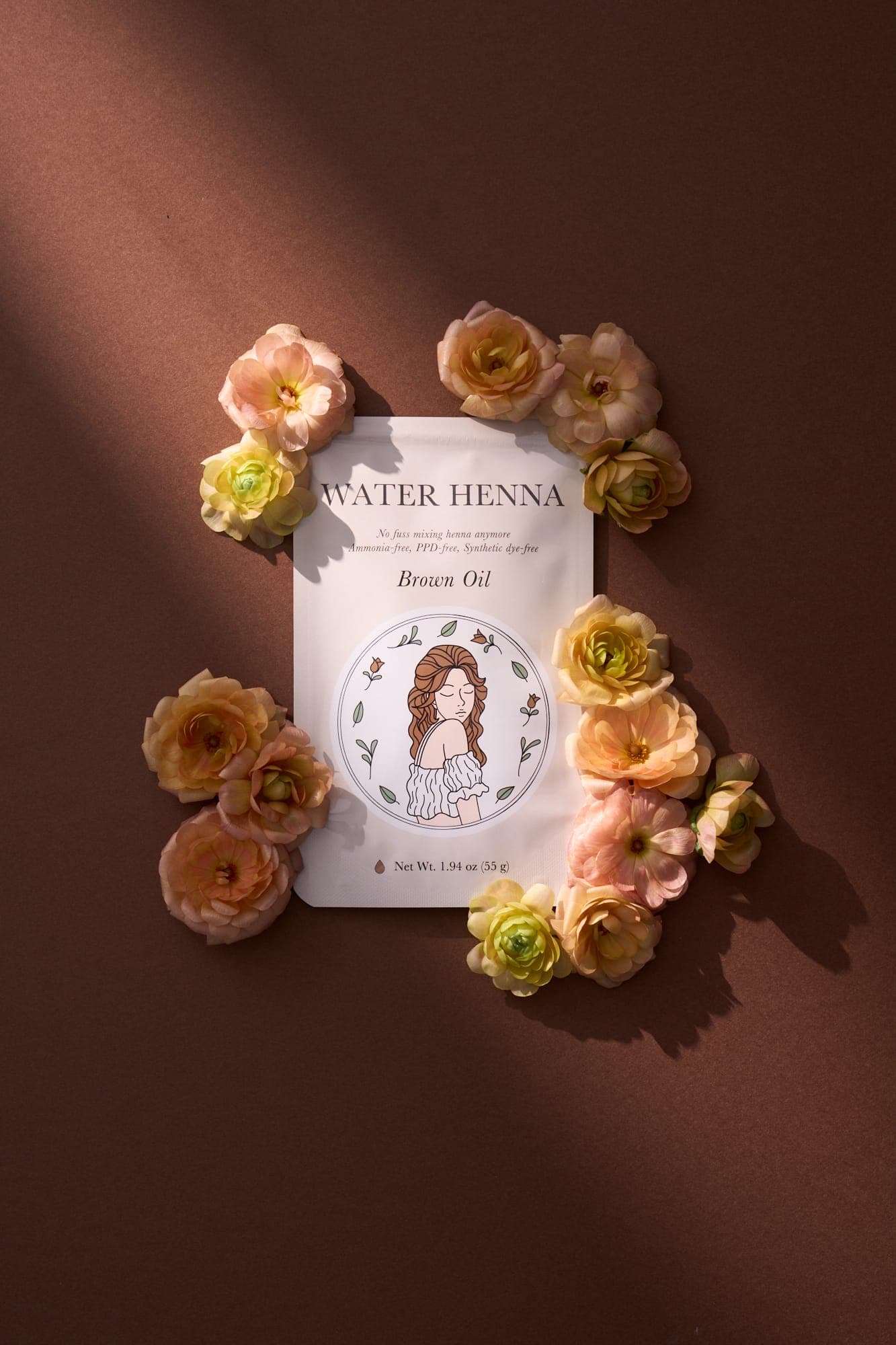
It also leaves hair conditioned rather than stripped. Water Henna is mixed from an oil pouch and an essence pouch, so coloring feels closer to a treatment than a chemical process, and hair comes out soft rather than squeaky and brittle. Readers who already use it as a henna hair pack are effectively coloring and conditioning in the same 30 minutes.
And it does not irritate. Water Henna scores 0.0 on clinical irritation testing — zero chemical pigments, MFDS-approved, developed under a national R&D project and covered by a manufacturing patent. On a scalp that has become sensitive, that record matters more than it used to.
How to Color Through Menopause
A few things are worth doing differently at this stage. First, do not shorten your coloring cycle: however much the gray bothers you, every two weeks is too often, and since henna holds its color longer than chemical dye, every four weeks is enough. Second, massage your scalp while you wait — work the paste in gently to help circulation, since you have 30 minutes to fill anyway. And in dry seasons, add moisture: menopausal hair is already dry and winter compounds it, so while henna's coating helps, it is best paired with a moisturizing routine.
Hair changing with age is not a problem to be solved. It is simply what happens. But how you handle it changes the outcome considerably — whether you keep asking a sensitive scalp to tolerate chemicals every three weeks, or color in a way that protects the hair while it does it. In the end your scalp makes that decision for you.
Read next
- Henna Hair Dye for Women Over 50 — A Gentler Alternative for Sensitive ScalpsHow To · 2 min read
- Do You Need Hair Supplements? How Henna Thickens Hair, With the ResearchIngredients & Safety · 3 min read
- DIY Henna Hair Packs — Amla, Coffee, Yogurt and Coconut MilkHow To · 3 min read
- How to Cover Grey with Henna — A Beginner's Guide to Water Henna BrownColor · 4 min read