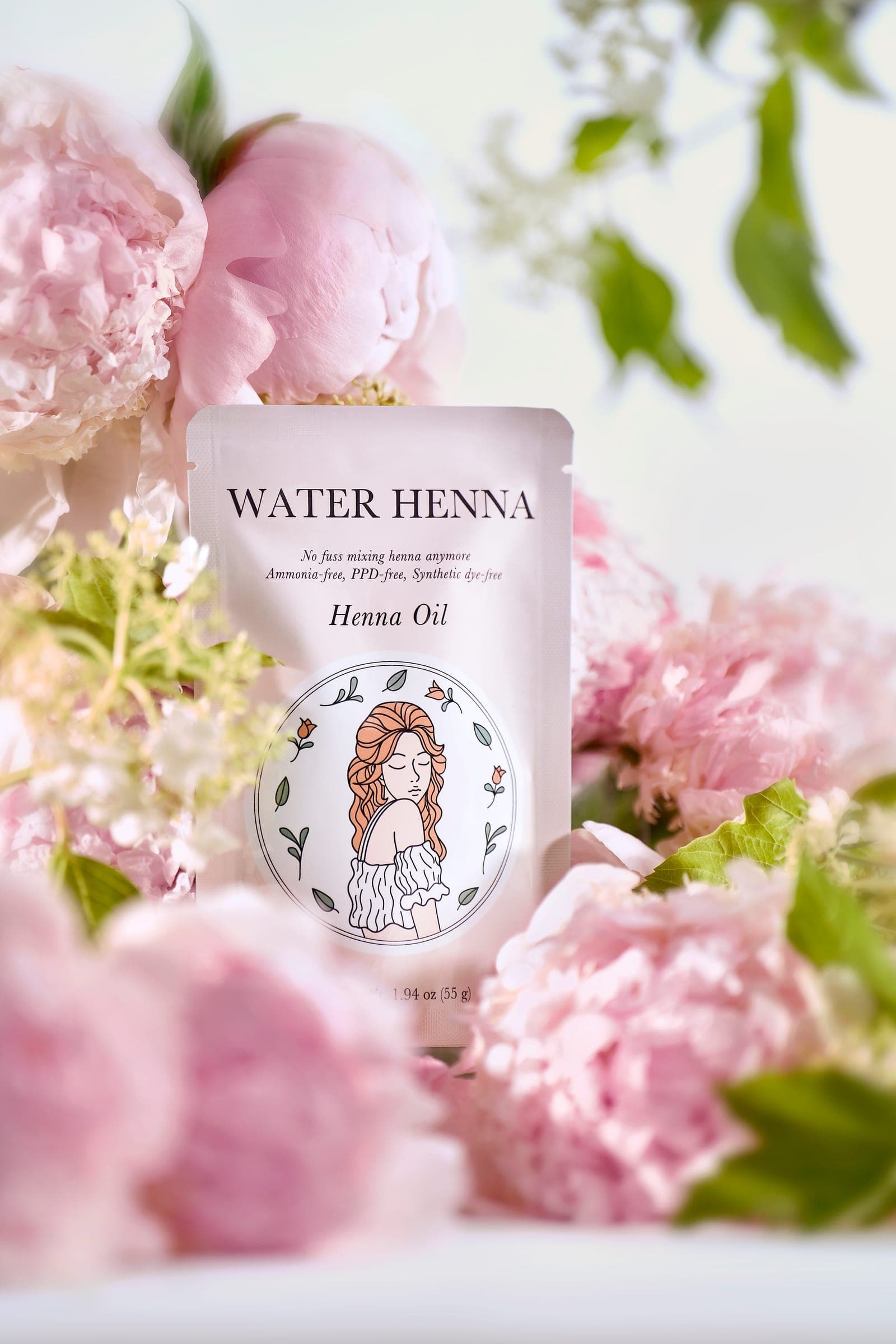
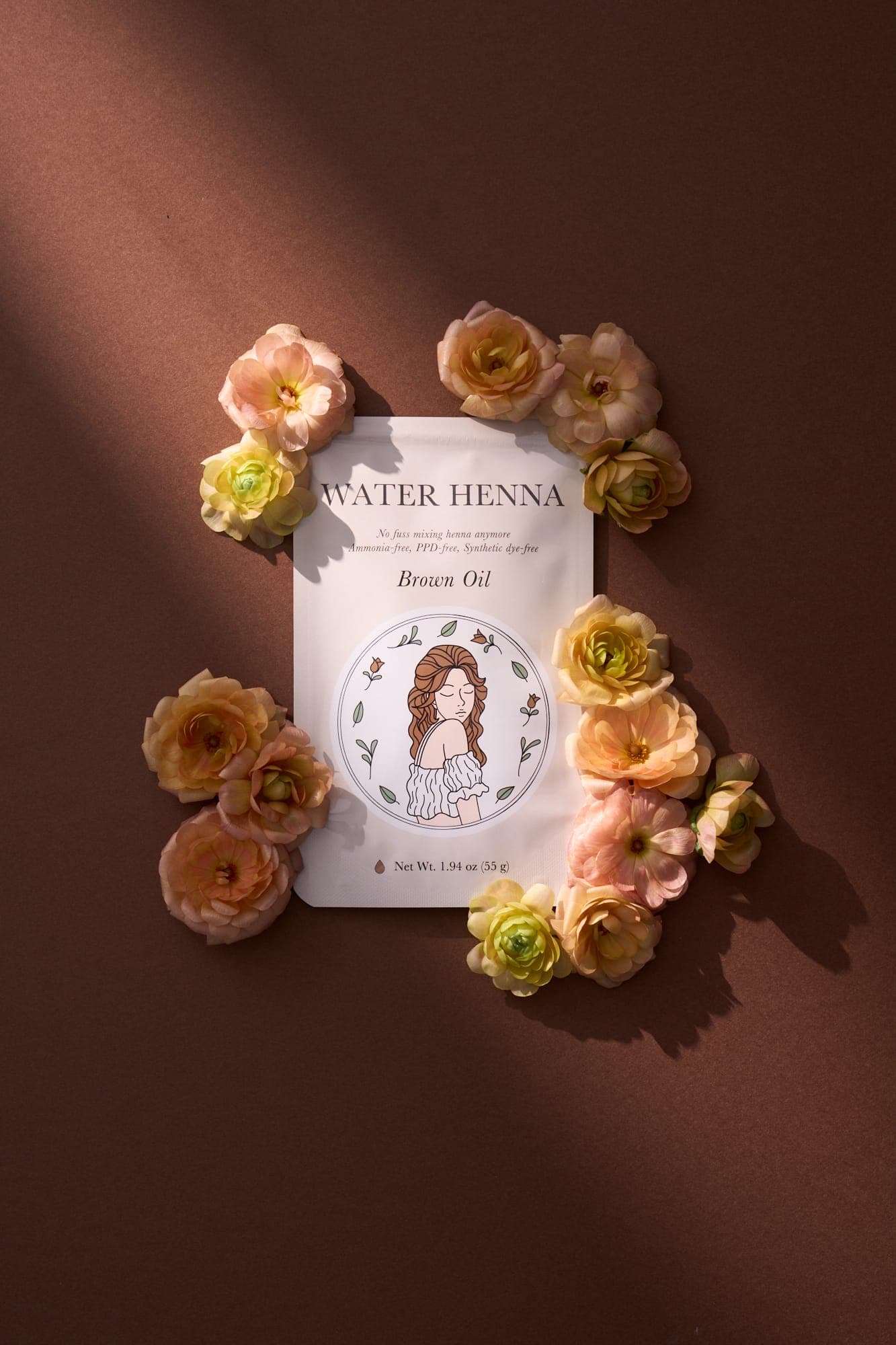
How to Cover Grey with Henna — A Beginner's Guide to Water Henna Brown
Water Henna Brown blends henna and indigo so a single application gives a natural brown on grey hair. It looks faintly blue right after, then settles into a deep brown over 24 hours. Here is a first-timer's guide to covering grey.

Water Henna Brown blends henna and indigo so that a single application gives a natural brown — a grey-hair dye and nothing else. It looks faintly blue right after dyeing, then, over 24 hours, the pigments bind to the keratin and settle into a deep brown. Using my own grey hair as the sample, here is what I learned first-hand, for anyone new to natural dye.
It Began with "I Don't Want to Apply It Twice"
Brown was not a product we set out to make. "Can't I dye just once?", "Applying twice is such a chore," "Can brown be 100% natural too?" — the requests never stopped, and unable to ignore them, our CEO began developing it. Worrying whether henna and indigo mixed would come out pretty, and whether it would sell, we launched in January 2025 — and the data showed an unexpected pattern.
Orders where the buyer and the recipient differed were unusually common. Someone was giving it to someone else — to a parent, to a spouse growing older alongside them, to a friend. Around then, male customers, once almost none, rose to about 18%. A single application and a familiar brown seem to have let it settle in with men too.
Two Things to Know About Water Henna Brown
First, it only colours grey. Water Henna Brown is registered with the MFDS as a functional cosmetic for grey hair. With no chemicals to strip your existing colour, it will not split the hair — but neither can it lift dark hair to a lighter brown.
Second, the final colour appears after 24 hours. The lawsone in henna leaf and the indican in indigo leaf bind to keratin over time, so right after dyeing the colour looks underdeveloped. A day later, a natural brown is complete. It is a product confirmed at zero chemical colorant and a clinical irritation score of 0.0, yet practical enough to give brown in one pass.
Tips for Covering Grey Cleanly
First, mix the brown oil and essence for a minute as if beating an egg. Warming the paste slightly — warm, not hot — activates the natural pigments better. Then apply carefully to the spots that bother you most — flyaways, sideburns, the crown — and lay a thick layer of paste over them again. A thick layer means more pigment to bind, so the colour comes out deeper. Careful and generous is the key.
After applying, wrap the head snugly in film so the paste stays pressed against the greys — natural pigment only colours what it clings to. Finally, keep it warm; body temperature is plenty, so an electric cap is ideal, and failing that a wool hat or even a towel will do. In winter it is essential.
How the Colour Changes Over Time
Here is the process on my own grey hair. Before dyeing, there is a good deal of grey.
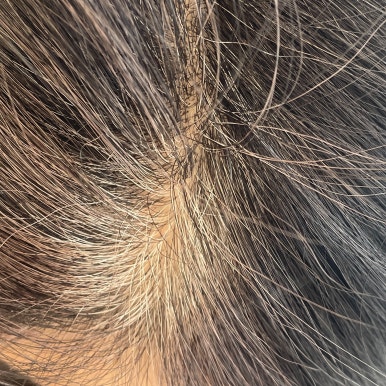
Right after dyeing it looks faintly blue, and in person almost slightly yellow. That is the natural colour just after a brown application, so there is no need to worry.
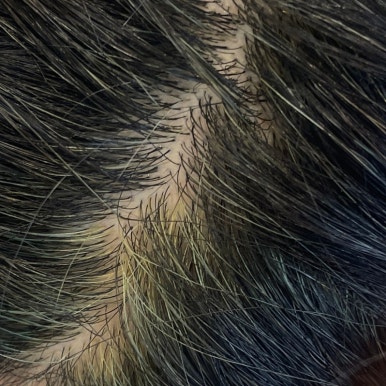
After 24 hours it settles into a deep brown. Up very close you might spot a stray grey, but from a metre away nothing shows.
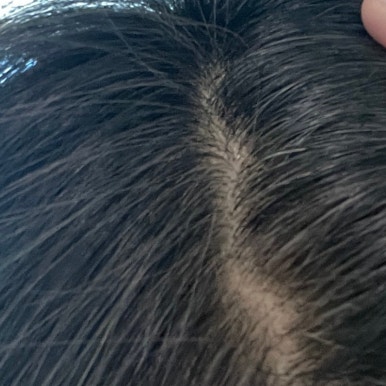
I hope Water Henna Brown, so comfortable and easy, gives someone the courage to begin natural dyeing. To fine-tune the shade, see the henna and indigo colour guide.
Read next
- Henna and Indigo Ratios — From Light Brown to Black, Step by StepColor · 4 min read
- Side Effects from 100% Natural Indigo? Why It Happens and What to DoIngredients & Safety · 3 min read
- Is Real Henna Orange or Red? Red, Brown and Black Henna ExplainedColor · 4 min read
- Does Indigo Cause Leukoderma? The Real Story Behind the Henna MythIngredients & Safety · 5 min read