Henna and Indigo Ratios — From Light Brown to Black, Step by Step
Henna alone gives orange; add indigo after it and you can reach anything from brown to near-black. Here are the henna-and-indigo ratios, order, timing, and what to check if the colour won't go dark.

Natural henna dye gives orange on its own; add indigo after the henna and you can reach anything from light brown to a deep chestnut or black. The colour is controlled by the ratio of henna to indigo, the order, the timing and the temperature. Here is how it works. (First, remember that 100% natural henna — powder or Water Henna — only colours grey hair.)
The reason I am writing this is a little painful. A one-star review appeared on Coupang: "I bought Black and got brown." The production batch was fine, and I dye with the same product every day, but a disappointed customer stays on your mind. So, in case someone with the same worry reads this, I decided to set down properly how to reach anything from light brown to black.
From Light Brown to Black — How?
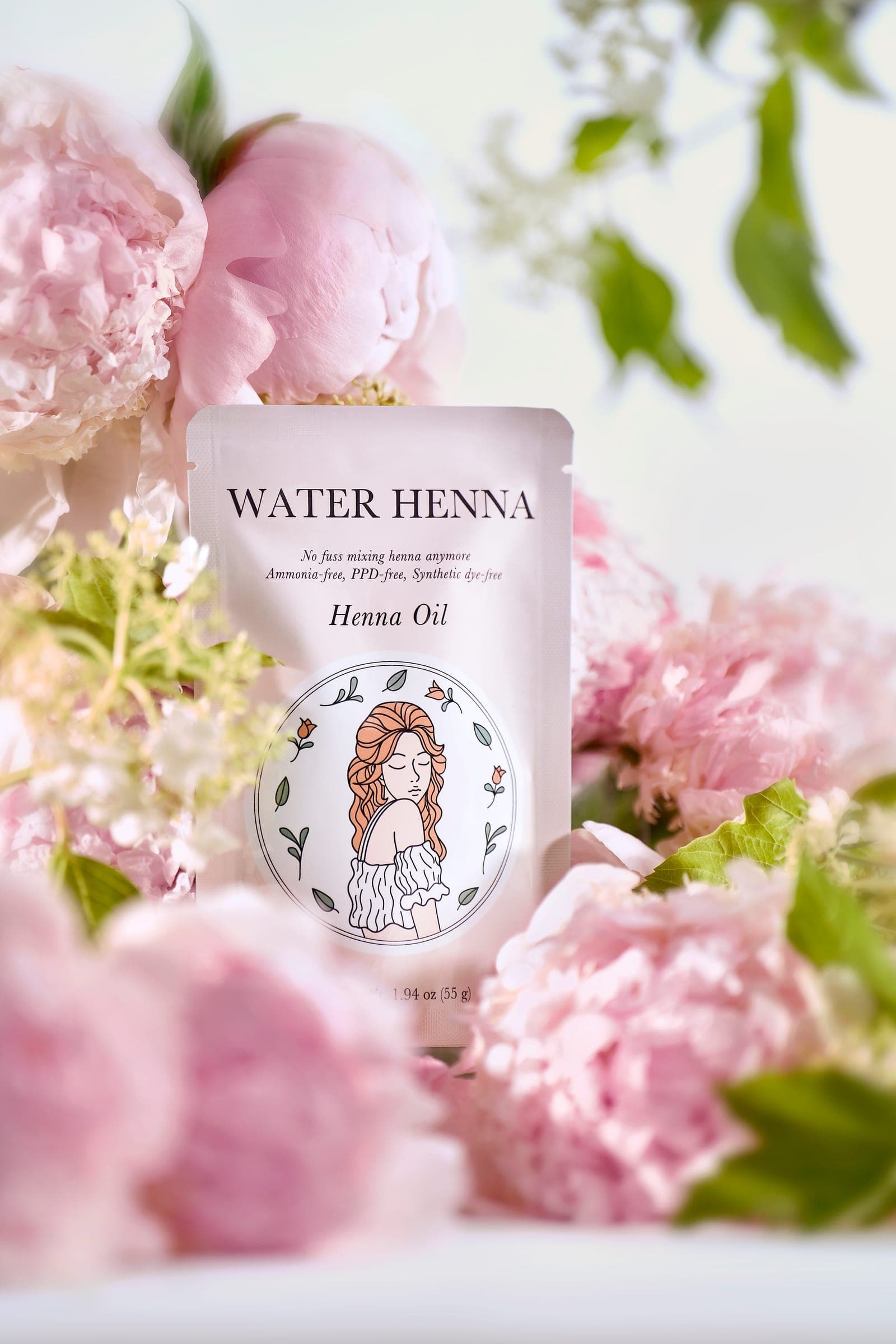
The lightest orange comes from henna alone: two hours with 100% natural henna powder, or thirty minutes with Water Henna henna.
For a light reddish brown, add a little indigo. In powder, mix two-thirds henna to one-third indigo with water and leave three to four hours; with Water Henna, mix the same ratio for an hour, or dye thirty minutes with henna then ten more with indigo (forty minutes total).
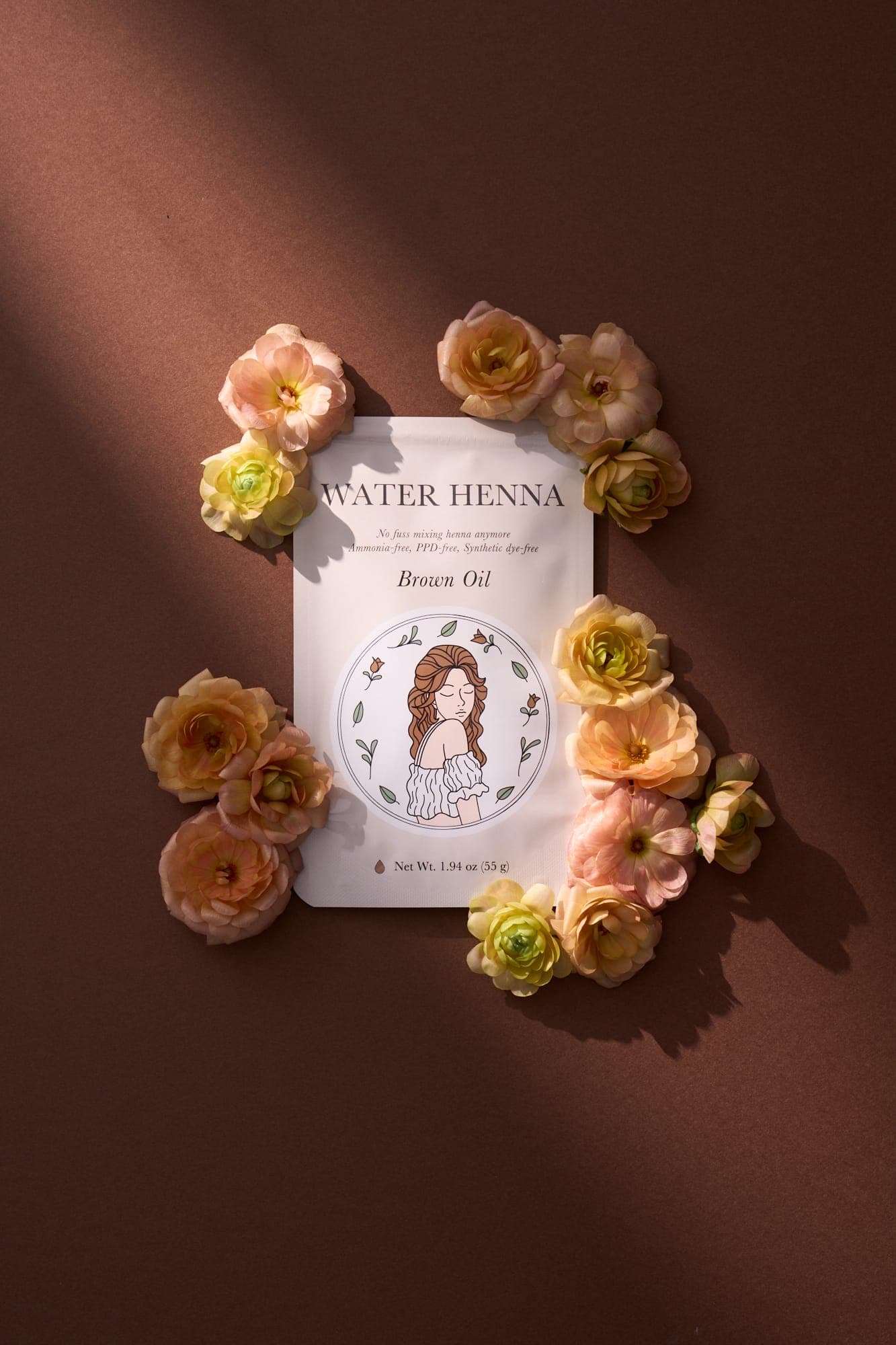
For a mid-depth brown, use henna and indigo half and half — three to four hours in powder, an hour mixed in Water Henna, or thirty minutes of henna followed by twenty of indigo.
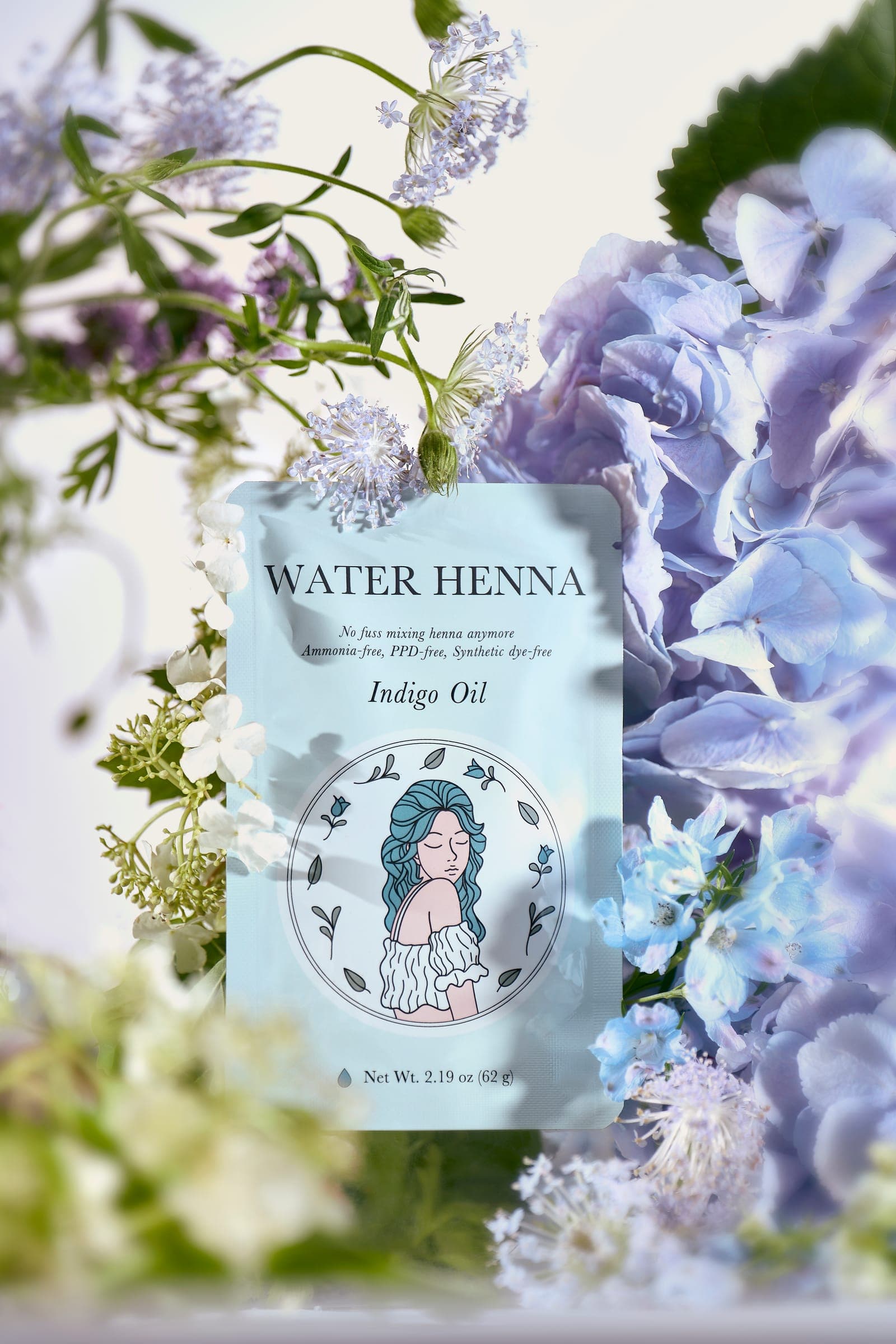
For the darkest chestnut-to-black, raise the indigo sharply. One-fifth henna to four-fifths indigo, left three to four hours, darkens to the colour of a ripe chestnut shell. With Water Henna, thirty minutes of henna followed by thirty of indigo is the most reliable: grey passes through orange to a deep chestnut, and after 24 hours approaches black.
My own favourite is that last method — henna first for thirty minutes, then indigo for thirty. A little more trouble, but as the henna and indigo pigments bind to the keratin in turn, the odds of a clean, dark result are far higher. Because henna and indigo are natural and oxidise on contact with air, the colour also keeps deepening for about 24 hours after dyeing.
If It Won't Go Dark, What to Check
If you wanted "black" but stalled at brown, it is usually one of these: perm or ordinary-dye residue still in the hair; keratin damaged by that residue and not yet recovered; a special case such as just after chemotherapy; dyeing in cold winter temperatures below the pigment's activation range; or, for thick hair, simply not laying the paste on the greys thickly enough.
Honestly, I was that last case myself. My hair is so thick the dye always ran short, and a thin, rushed application gave a weak colour. A Water Henna set is 130 g — about 30% more than a typical dye — but for long, thick hair, one pouch can still fall short. To go near black, you must lay it on generously.
Temperature matters too. We suggest wrapping the head warm, around 40°C. Powder-henna instructions sometimes say 60–90°C, almost boiling, but you never need anything near a burn — the gentle warmth of a salon heat treatment is plenty. On a day that turns suddenly cold, wrapping in film alone can leave the colour weak.
In Short, How Not to Fail
To sum up: with henna and indigo, powder or Water Henna, you can reach light brown through deep chestnut to black. Match the ratio, order, timing, temperature and a generous amount, and failure is rare. If you are curious why the colours differ in the first place, see is real henna orange or red.
Read next
- Is Real Henna Orange or Red? Red, Brown and Black Henna ExplainedColor · 4 min read
- How to Cover Grey with Henna — A Beginner's Guide to Water Henna BrownColor · 4 min read
- "It Didn't Take": What 817 Customer Reviews Say About Henna That Won't DevelopHow To · 6 min read
- Side Effects from 100% Natural Indigo? Why It Happens and What to DoIngredients & Safety · 3 min read