
Side Effects from 100% Natural Indigo? Why It Happens and What to Do
Itchy after dyeing with 100% natural indigo? It is usually a normal reaction. Indigo powder should be used as an aqueous solution below 25%; using neat 100% powder can cause itching. Here is why — and how to stay clear of it.

If you dyed with indigo powder billed as 100% natural, found yourself maddeningly itchy, and searched your way here — first, take a breath. That itching is, in most cases, an entirely normal reaction; it is uncomfortable for now, but nothing is seriously wrong. Still, it helps to know why it happens and how to keep clear of it.
It's 100% Natural — So Why the Itch?
The indigo powder sold in stores (Indigofera tinctoria, or "true indigo") is, like 100% natural henna, very likely genuinely natural. Yet used incorrectly it can still provoke itching. The key point first: this itch is a world apart from the skin irritation, carcinogenicity and genotoxicity associated with PPD in ordinary dyes.
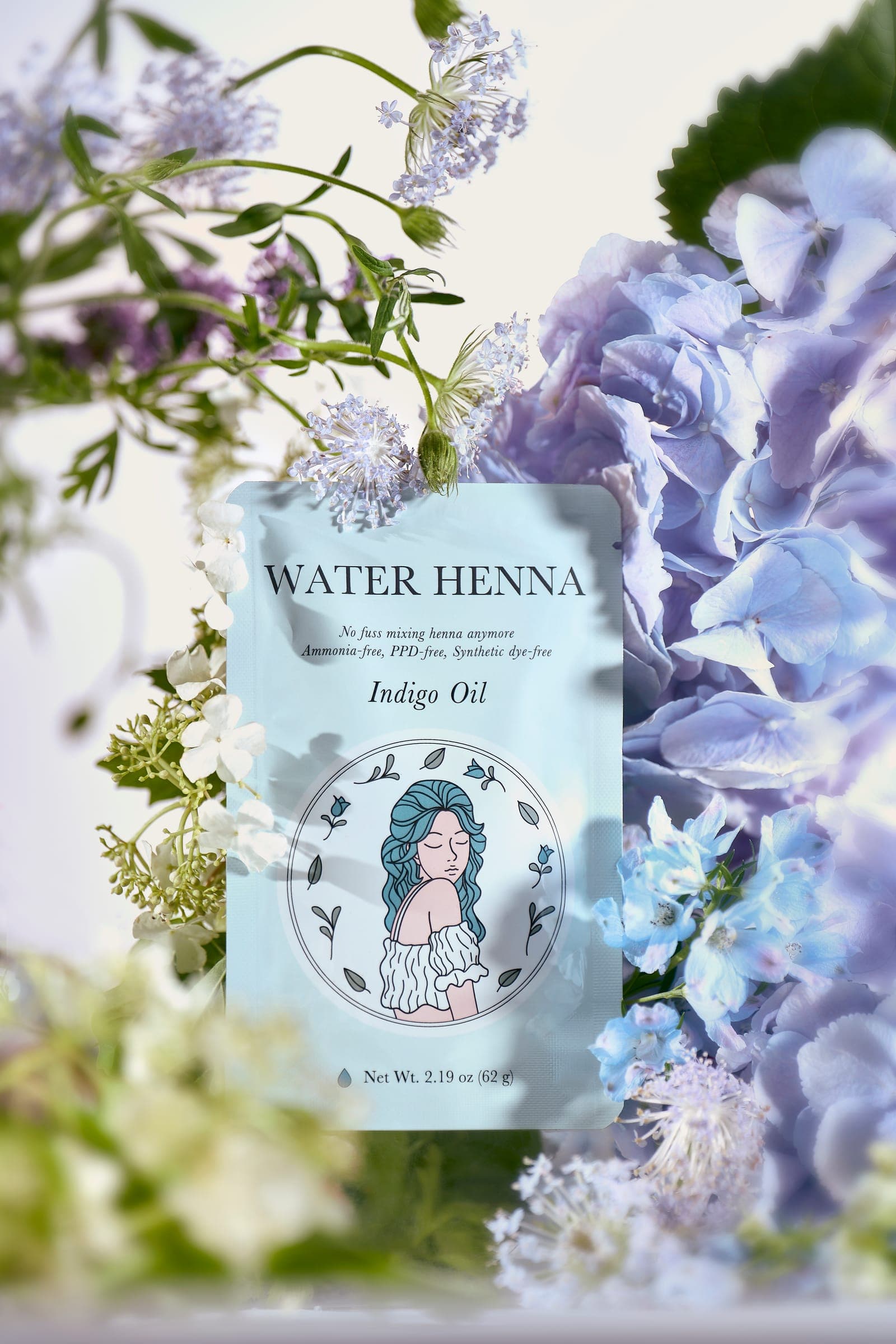
The issue is concentration. European guidance holds that indigo powder should be used as an aqueous solution below 25% — at which point you get the benefits without the itch. In Korea, though, neat 100% powder was often sold with no usage guidance, and the MFDS ended up banning the sale of 100% Indigofera powder from 2025. (Some still sell it by workaround, and there are safely-approved functional products such as Water Henna Indigo.)
Indigo Is Actually Safer Than Henna
Fussy usage aside, natural indigo is good enough that I would urge older users, in particular, to choose it. I did not know this before, but the EU SCCS reports indigo as considerably safer than even henna — and henna already rates as quite safe. Indigo scores more than three times higher. Korea's MFDS cites the same European data, and we included it in Water Henna Indigo's approval dossier as well.
One reason for that high safety rating is a compound called indirubin, reported in research to have anti-inflammatory and neuroprotective properties. Far from being hazardous, indigo leans toward the gentle. (This concerns the compound in the literature, not any benefit of the product.)
So Why Does It Feel Like a Side Effect?
The trouble is, purely, in how it is used. Miss the right concentration and even someone not especially sensitive can itch — which is alarming in the moment. It is nothing like the frightening images that come up when you search "henna side effects," but an itch or a sting near the eyes will worry anyone.
How to Stay Clear of Side Effects
So if 100% natural indigo left you itchy, here is what I would suggest. First, have the itching looked at by a doctor. Second, never reach for a chemical dye instead — those are harsher still. And if you want to keep dyeing naturally and safely, use indigo strictly as an aqueous solution below 25%, or — if handling the powder at all feels like too much — use Water Henna's liquid form, which I believe is the surest way to stay clear of side effects.
I have woven in a little about Water Henna, but only to call a safer method safer. The related myth of indigo and leukoderma is addressed separately in indigo and leukoderma.
Read next
- Does Indigo Cause Leukoderma? The Real Story Behind the Henna MythIngredients & Safety · 5 min read
- How to Cover Grey with Henna — A Beginner's Guide to Water Henna BrownColor · 4 min read
- "It Didn't Take": What 817 Customer Reviews Say About Henna That Won't DevelopHow To · 6 min read
- PPD-Free Doesn't Mean No Hair Loss — Why Henna Seems to Tangle HairIngredients & Safety · 4 min read