Is Real Henna Orange or Red? Red, Brown and Black Henna Explained
Dye grey hair with 100% pure natural henna and it comes out orange. Red adds acids, brown adds indigo, and black adds a chemical colorant like PPD. Here is why henna colours differ, and where the side effects really come from.

Two people dye with henna, and one comes out wine-red while the other turns a tigerish orange. Here is the short answer: dye grey hair with 100% pure natural henna and it comes out orange. Red henna adds acids, brown adds indigo, and black adds a chemical colorant. This is a look at where those differences come from — and where the side effects really begin.
What Colour Is 100% Natural Henna?
Take 100% natural henna powder from several MFDS-compliant farms, dye wool with each in the lab, and the result is always a similar orange. The research literature says the same. The colour of pure natural henna converges, on grey hair, to a single orange. So where do the red, brown and black hennas on the shelf actually come from?
What Do Red, Brown and Black Henna Add?
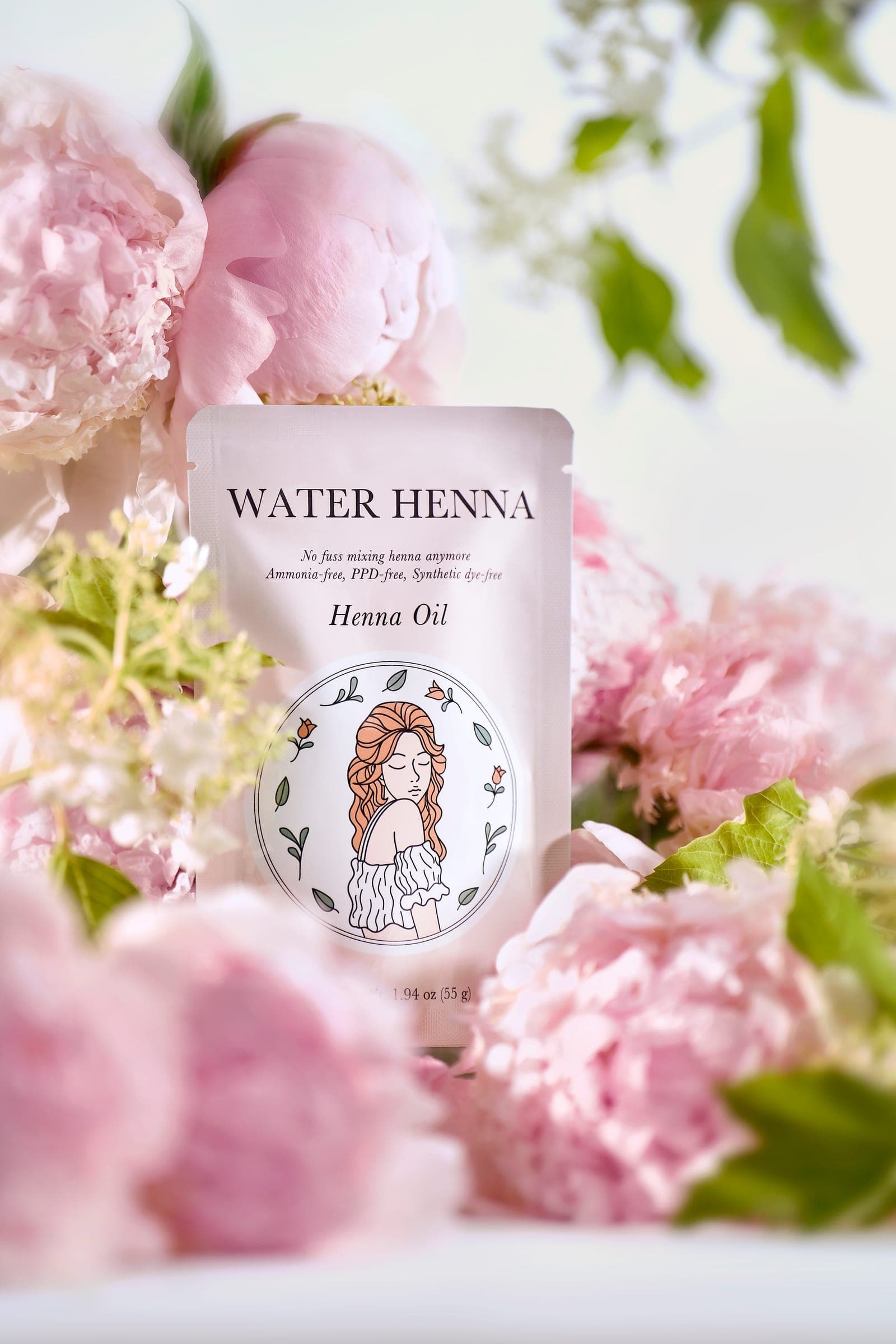
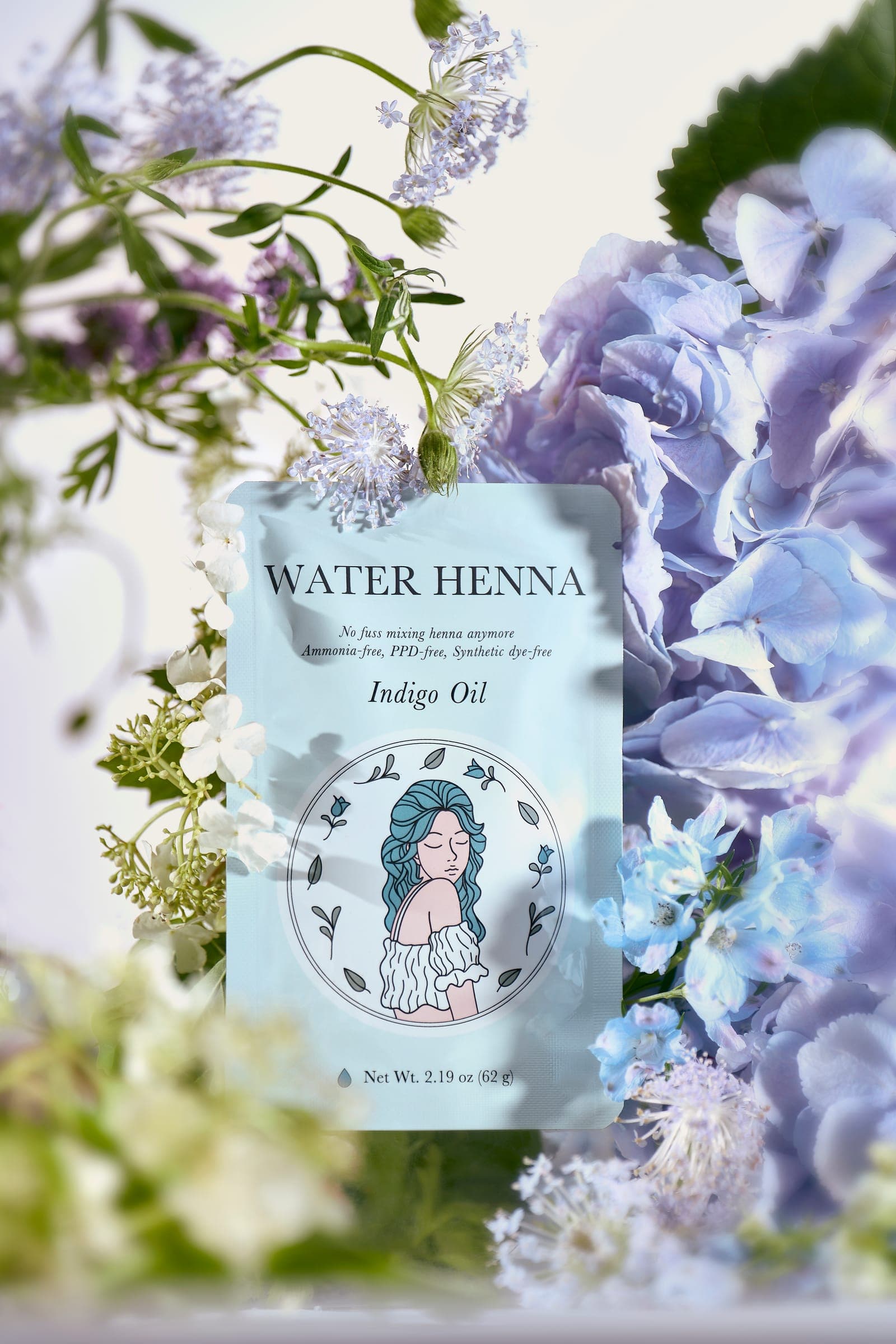
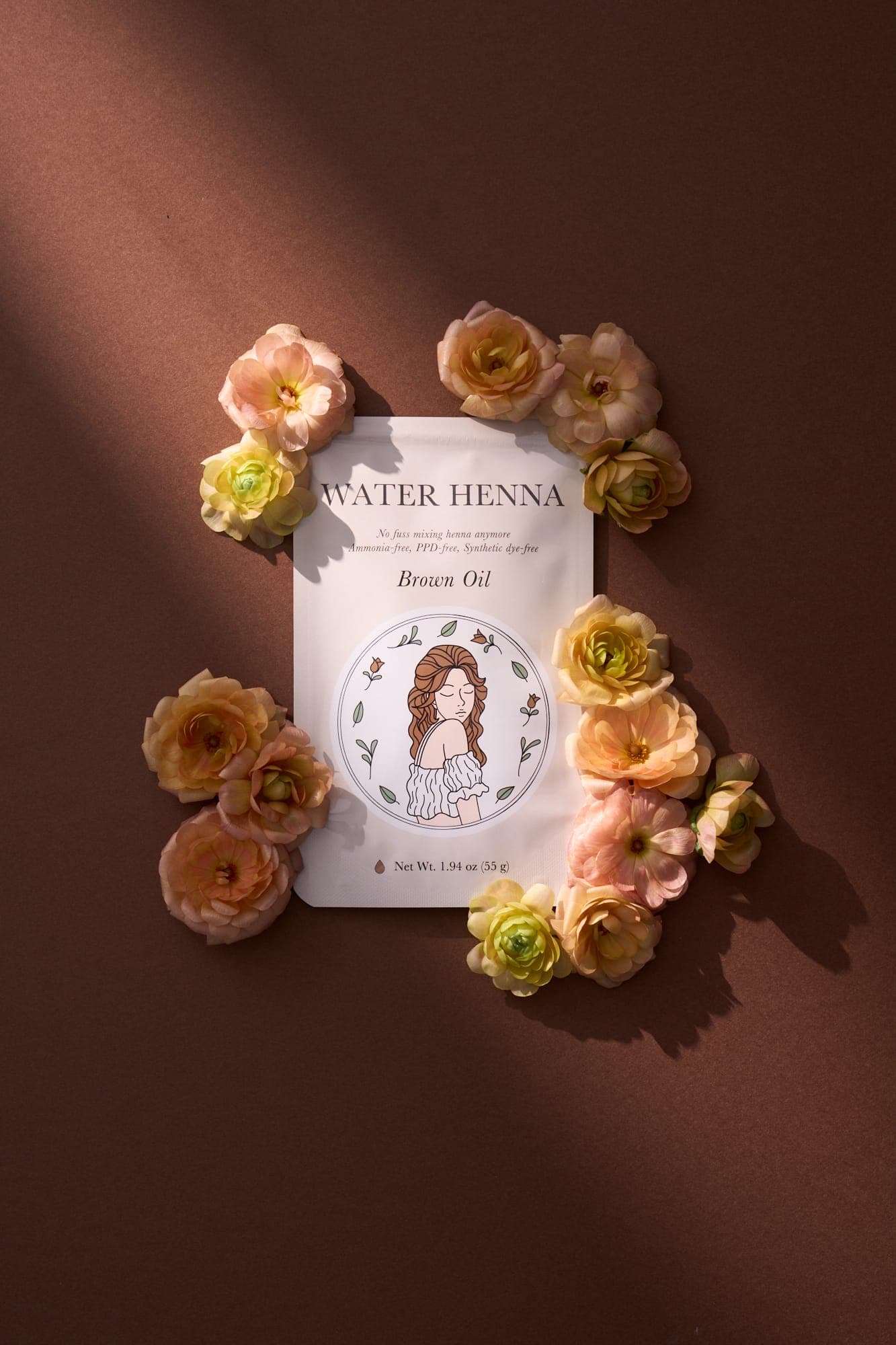
A little more testing gave a simple answer. Orange henna is 100% pure natural henna with nothing added. Red henna mixes in acidic materials such as amla or vitamin C. Brown henna adds 100% natural indigo. And black henna blends natural henna with an oxidative dye — a chemical colorant such as PPD or m-phenylenediamine.
Why Does Acid Turn It Red?
Red henna's secret is a shift in pH. Pure natural henna is mildly acidic to begin with; add a generously acidic material like vitamin C or amla powder (Indian gooseberry) and grey hair takes on a deep wine or rose red rather than orange. The reason for doing so is likely that orange stands out against the mostly black hair common in Korea, so a deeper shade is preferred. Mixing in coffee follows the same logic — coffee's chlorogenic, citric and malic acids make it mildly acidic too.
So Is "Natural Red Henna" Safe?
Which raises a question: if acid was added, would it not sting? Water Henna users consistently report no skin irritation, and the test reports say henna itself is non-irritating — yet complaints that "henna stings" do exist. The likely culprit is the acid-boosted red henna.
Amla sits at around pH 2.5–3.5 and vitamin C near 2, comparable to lemon or vinegar. At that level, even a red henna advertised as "natural" can sting — not because of the henna, but because of the acid. And while it is fine if only food-grade natural acids are used, red henna produced in India gives you no way to know which acid went in until it is tested.
Why Is Black Henna the Usual Cause of "Henna Side Effects"?
As an aside, the classic troublemaker behind henna side effects is chemical, black henna. Because a colorant like PPD is permitted up to around 2% under Korean rules, even a "98% henna" is, in practice, little different from an ordinary dye. Limits vary by substance — some under 1%, some higher — so a patch test before use is wise. If dyeing with henna left you with itching or a darker-than-expected result, black henna is the most likely reason.
How to Stay Clear of Side Effects
In the end, the safest way to avoid henna side effects is to use 100% orange henna with nothing added. If you want a calmer shade, add 100% natural indigo rather than a chemical colorant. How to combine the shades is laid out separately in the henna and indigo colour guide.
Read next
- Henna and Indigo Ratios — From Light Brown to Black, Step by StepColor · 4 min read
- How to Cover Grey with Henna — A Beginner's Guide to Water Henna BrownColor · 4 min read
- "It Didn't Take": What 817 Customer Reviews Say About Henna That Won't DevelopHow To · 6 min read
- Side Effects from 100% Natural Indigo? Why It Happens and What to DoIngredients & Safety · 3 min read