How to Choose a Henna Hair Dye — A Practical Buyer's Guide
Searching for a henna hair dye recommendation returns too many products to choose from. Here is how to choose by criteria — chemical colorants, irritation, certification, format, time — instead of brand hype.

"Can you recommend a henna hair dye?" I get this question often. Honestly, I am careful about naming one brand and declaring "this is the best." Every scalp is different, and so is the colour you want and the time you can spare. So instead of brand names, this post walks through the criteria that actually matter when choosing a henna dye. Once you know the criteria, the recommendation makes itself.
What Criteria Should You Judge a Henna Dye By?
After using many hennas myself and going through the work of getting a product certified, I settled on five criteria. First, whether the ingredient list contains chemical colorants. Second, how much it irritates the scalp. Third, whether it carries a credible certification such as Korea's MFDS. Fourth, the format — powder or pre-mixed liquid. Fifth, how long the dyeing takes. Work through these five and the right product narrows down on its own.
Does "Natural Henna" Always Mean No Chemical Colorants?
The first thing to check is the full ingredient list. Most hair dyes on the market get their colour from chemical colorants. Even products that lead with "natural" sometimes add an oxidative dye such as PPD to reach a dark shade, and even dyes classed as "gentle" or non-irritating may use metal-salt colorants. Judged purely by ingredients, henna is effectively the only dye whose pigment is 100% natural.
The SCCS (Scientific Committee on Consumer Safety) is Europe's authoritative body for assessing the safety of cosmetic ingredients. Its materials have repeatedly flagged chemical colorants such as PPD for skin sensitisation, and carcinogenicity has been part of what it reviewed; the SCCS concluded that "the risk may be unclear when limited to 2% or below," and Korea's MFDS caps the permitted concentration accordingly. So rather than trusting the word "natural" on the front, read the ingredient list on the back yourself. Check for chemical colorants (PPD, m-phenylenediamine and the like) and for ammonia — not a colorant, but a substance flagged for toxicity — using our PPD-free guide.
Powder Henna vs Liquid Henna — What's the Difference?
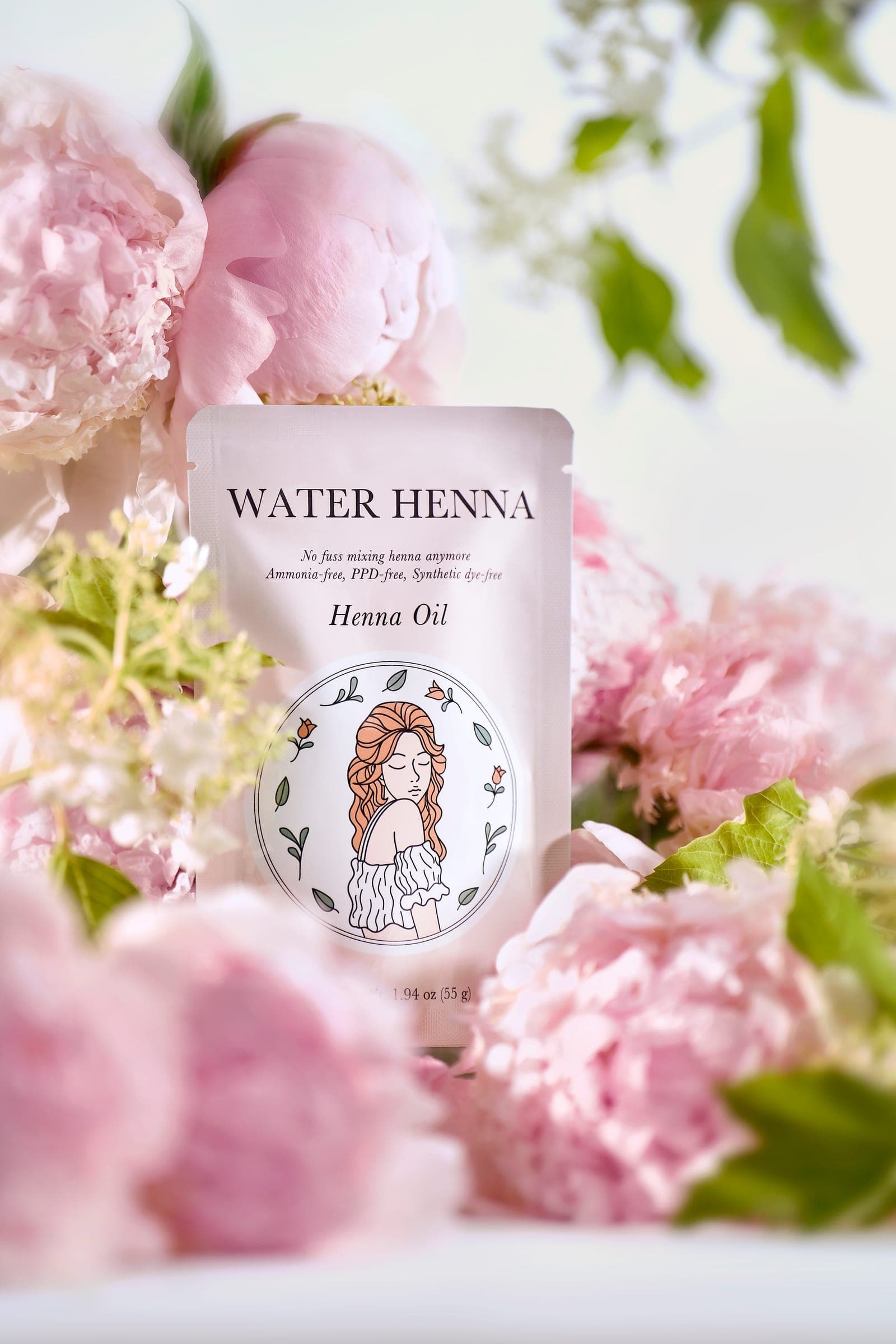
Both are natural henna. The difference is convenience. With powder henna you tip the powder into a bowl, mix it with water, and stir without stopping for about 20–30 minutes to reach a spreadable consistency; fine powder drifts around as you do, and a deep colour can take a couple of hours to develop. A pre-mixed liquid type (this is how Water Henna works) becomes a paste after about 60 seconds of mixing oil and essence, with no dust. The colouring principle is the same; the difference is in the fuss of preparation and time. If sitting still for hours is hard, or airborne powder bothers you, the liquid type is easier.
Which Henna Covers Grey Well?
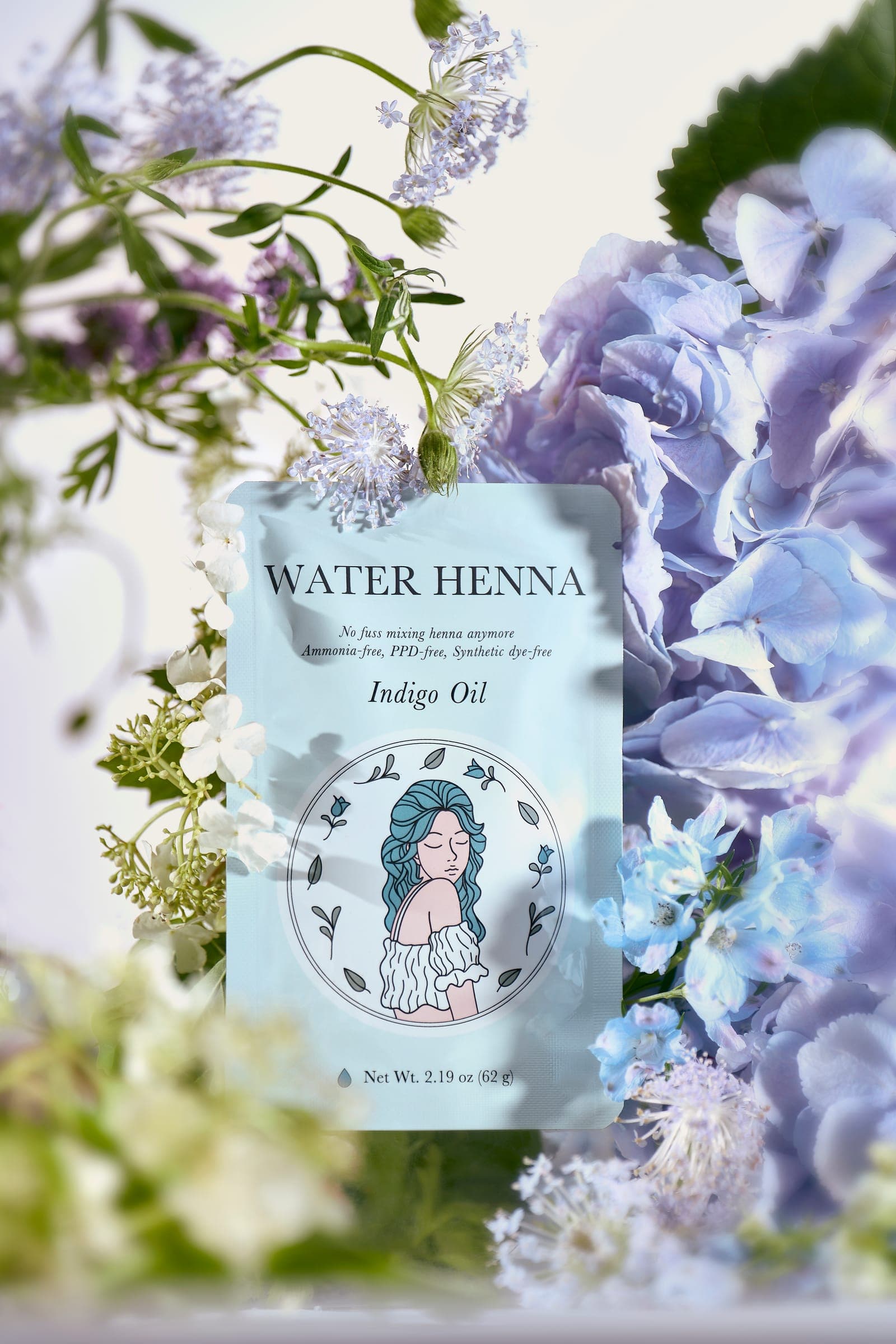
Henna alone tends to give an orange-to-red result. To cover white hair in a deep brown or black, you need two steps: colour first with henna, then dye again with indigo. So if grey coverage is your goal, look for a set that includes both henna and indigo, and clear guidance on the colour steps.
What If You're Worried About Irritation?
If your scalp is sensitive, or has grown more sensitive with age, look for a product that publishes an objective figure such as a clinical irritation index. A test report or an MFDS certification is a more trustworthy basis than the word "gentle" in an advertisement. And whatever you choose, do a patch test on the inside of your arm first.
So Which Henna Dye Would I Recommend?
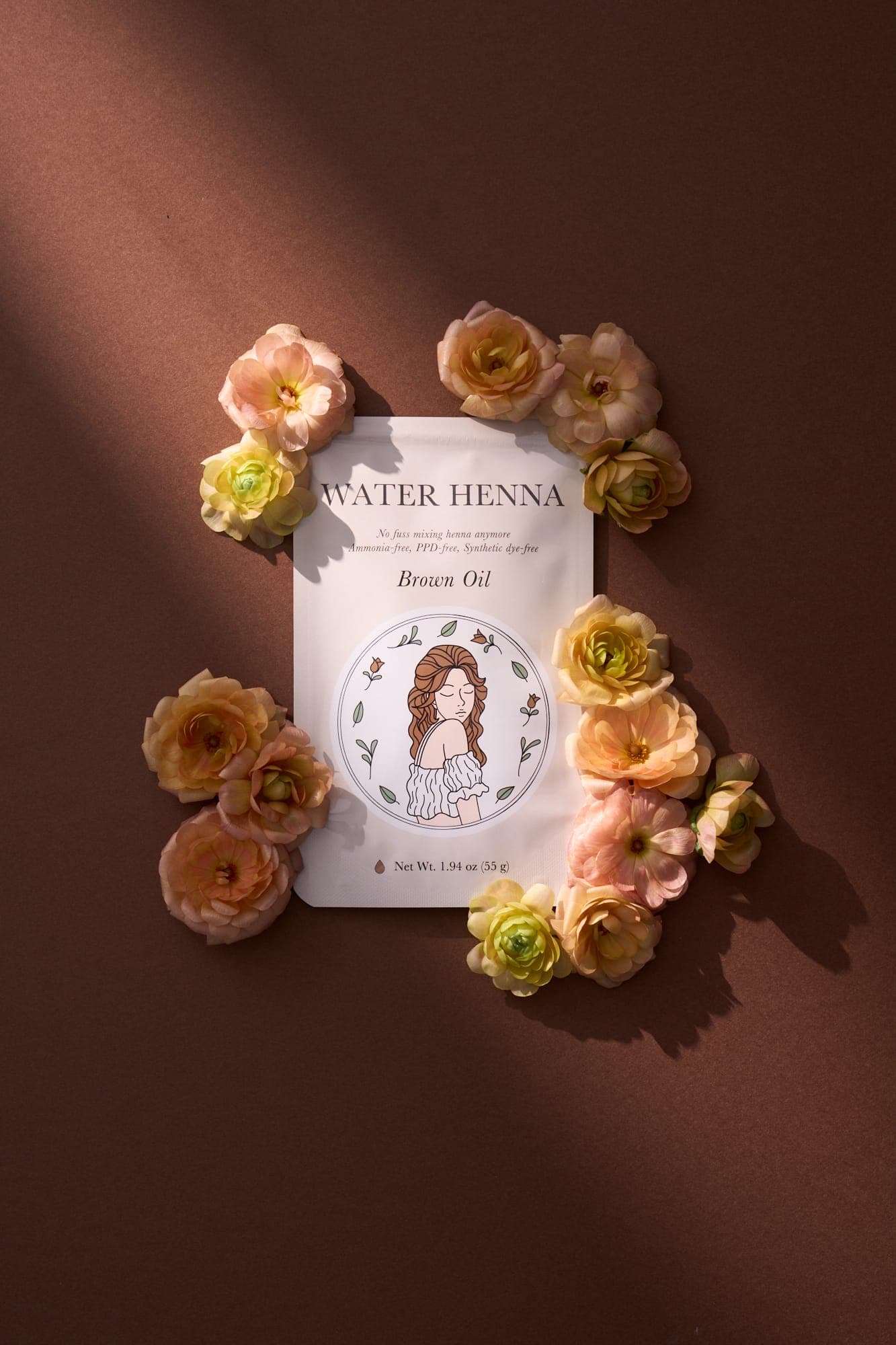
Honestly, Water Henna is what I made because I wanted to satisfy every criterion above. It has zero chemical colorants and 100% natural pigment, scores 0.0 in first-degree skin irritation testing by the Korea Skin Clinical Research Center, and is an MFDS-approved functional cosmetic — developed under a national R&D project and covered by a manufacturing patent. You mix oil and essence for 60 seconds, wrap the hair, and each step is done in 30 minutes — about an hour in total for the two-step henna-plus-indigo route to a deep brown — with no powder flying around. Still, in the spirit of this post, I would rather offer the criteria than say "Water Henna, no matter what." Whatever you choose, read the ingredient list yourself and pick a product that passes all of them. If Water Henna turns out to be the answer once you judge by those criteria, that is the thing I am most grateful for.
Read next
- Is PPD-Free Hair Dye Actually Safe? How to Find a Truly Natural Henna DyeIngredients & Safety · 4 min read
- Water Henna's Full Ingredients — Just 11, Fewer Than Ice CreamIngredients & Safety · 2 min read
- How to Cover Grey with Henna — A Beginner's Guide to Water Henna BrownColor · 4 min read
- Henna Hair Dye for Women Over 50 — A Gentler Alternative for Sensitive ScalpsHow To · 2 min read